Thursday, 30 January 2025

small list


At the time, prearranged, she’ll sit at a small round table as low-rise trousers paint strokes across the floor. For a minute, she’ll watch her watching the dancers and her heart will feel green. She’ll join her and they’ll drink through short straws, afraid of everything they don’t have in common. 

Three and a half drinks later, they’ll care less. She’ll pull her up to join the ballroom crush. Freehand, getting looser, they’ll sweat out concentric circles. They’ll draw together with hips and mouths and hot, brave hands.

And how miraculous it will feel to watch each other waking up! And how naive they’ll be to think that all they need to make things work are hopes and good intentions! But what unthinking joy it will be to pass the morning sleeping, eating, barely moving in and out of bed!

They’ll move in together. They’ll combine their crockery. They’ll ingest each other’s life stories and leave the bathroom door unlocked.

They’ll watch documentaries at night. They’ll meditate in the morning. 

She will worry about taking off her clothes. She will long for her to speak while they sit at the table, candlelit, spooning up mouthfuls of carrot soup.

They will go to birthday parties as a couple and regret all the drinks they buy. They will receive Christmas cards addressed to them both. Their names will be compounded.

Her screen time will increase by 7 minutes compared to the previous week, and by 14 minutes compared to the week before that. 

When she is not at work or seeing friends or out on her bike, she will watch her watching her phone and fantasise about throwing it out of their dream house windows for which they pay too much rent.

They will tell their friends that nothing’s wrong. They’ll say they’re in a rut. 

Their lease will draw to its end, and they’ll avoid the conversation about renewal.

Over cups of tea and cardboard boxes, they’ll speak at cross purposes and disagree. They will shout and cry. They will admit to things they’ve done. They will talk about hatred and betrayal. They will say things they don’t mean. Their naked keys will clatter on the floor. 

They’ll talk about regrets, and she’ll be nestled there, encoded in a small list in a story reserved for close friends.
SHARE:

Friday, 27 October 2023

Handprint

Walking home from work I am struck by the silence. Two white wardrobe doors sit horizontally against a low wall, their doors frosted glass or plastic. The front garden with the tall hedges on three sides sends out its watery sounds; there is a hidden fountain inside and miniature raised beds holding secret vegetables or perhaps new flowers. It is always colourful in there because passersby can’t see it. 

Ahead there is an ambulance with its left-hand side fully open, a side door wound up and lights shining out into the late afternoon, somehow alive in a way I’ve only seen in films. Two police cars flank it, both empty with their lights turned off. One is pulled in towards the pavement at a sharp angle as if it stopped in a hurry but now all its urgency has gone. Three police officers loiter on the pavement. Their voices murmur like the water of the fountain a few doors down. I cross to the other side of the road, walking past a man waiting by the parked cars. As I pass him he starts to follow, a few steps behind me.

Foxes, he says. 

I don’t say anything.

There was a fox just up there, eyeing me. 

I look at him as if to ask if he was scared, and he says, I wasn’t scared, but have you seen that video? Of a man getting chased by a fox? Nasty.

I tell him I’ve not seen it. Something in his voice is warm. He’s in a light puffer jacket and black jeans, headphones on. 

It was watching me, see?

We look around as if we might find it. My road is coming up. 

They always congregate here, I say, and it’s true, though you don’t normally see them until later.

We part at the corner and he says goodbye as I say good luck, and then he says good luck too. At home all the lights are off; I’m the first one back. I unpeel myself from my clothes, step into the shower, feel the air warm up. I dress and make tea and sit at the kitchen window. 

In my peripheral vision, there are handprints on the walls. Bodies from warzones fertilise the soil; their skin feeds the vegetables. I cook spinach and sweet potatoes and black beans and not one of these things grew locally. I wonder when local became both insult and aspiration, as I look more intently at the marks on the wall – no, they are footprints. Sole prints from attempted inversions, toe marks trailing down the paint. I still can’t do handstands without the solid support of a bare wall, but I’m trying. The flat downstairs opens and closes its front door with an anonymous, high-pitched thanks bye, meaning the Australian woman whose name I can’t remember must be in after all, though I believed myself alone in this building, walking up and down singing loudly, always reinventing songs from a past life. I wonder what she’s received and think of all the letters I used to send out into the world, all the notes and torn-out scraps, all the ink on paper, all the hands my words have passed through. His scarred fingers.

I walk through late sunlight, past a house plant whose leaves sound papery as we move against each other. I think of him elsewhere in the city, moving through the same light. I dreamt about him last night; he’d grown larger and my mum was there. She told me she regretted all the things she’d never said to him and went up dream stairs to find him, to tell him that no, she was angry actually, so angry the anger might never stop, but in the dream I told her it didn’t matter. Over messages she often tells me how sorry she is – I should have warned you off; I should have told you to leave, to get out of there  – but it wasn’t her fault. Whenever I have these dreams I think about relaying them, but one of my colleagues at work whose older years and panoply of stories are eternally appealing told me that dreams aren’t for analysing, but for the processing of the soul. I wash my hands and light a candle. Train sounds mix with late builders packing up across the road. 

The dream residues are less enduring now. I dream that I have a complicated but not bad-natured conversations with people from the past. When I tell new friends about the life we used to live, they look confused. They’re not what I was expecting, my housemate tells me. She studies their faces on her phone screen, having searched for them on Instagram, pinching the pictures to make them bigger. They all look very… normal. I tell her I can’t imagine a life where I didn’t know what it felt like to go down to the living room every day and find them sitting there in musty dressing gowns with greasy hair and plates of scraps on the arms of the sofa. 

The front door opens and closes again and my housemates filter in. I hear them chattering, hear music filling the kitchen, hear my voice being shouted up the stairs, and: still ready for nine?! We’re going out. 

Everyone told me it would take a year and a half, maybe two, to be over it. I realise, now, that this sense of moving on is more like moving away, as I struggle to remember the contours of the kitchen sink or the hob at which we cooked. I cannot conjure up his laugh, no matter how hard I try. I struggle to remember him as anything other than a collection of words and walks and body parts which only exist in the memories of the ways they touched me. Perhaps this is normal, or perhaps it isn’t. 

Tonight, we’re going out to dance in a gallery that stays open late into the night, and when that closes we’ll walk along the river to a smaller venue where the rooms are warren-like and the music changes with the lights. We’ll wear matching suits without meaning to. We’ll know all the words.

Sometimes I wonder if my brain is still in the throes of breaking down, working through the slow violence of his aftermath. I Google it, of course, and learn about the causes of unexplained tinnitus. I learn that I might experience overeating, undereating, anxiety, slowness of breath, quickness of breath, insomnia, lethargy, hopelessness, and depression in the wake of it all. At least he left his mark, perhaps he’ll muse, as he completes his order on Deliveroo or sits on his swivel chair, laptop screen dimming, late light glazing the lower ground floor window. His room will smell of salt, or maybe the women he sleeps with will give him generically wood-scented candles for his birthday. 

When everything closes, I’ll suggest that we stay up. We’ll stumble to the nearest station and catch the earliest train to Brighton. The sky will be getting lighter but we’ll race down to the seafront anyway and catch the last of the pink dawn reflected in the sea. The pebbles will be damp through our clothes and we’ll plunge our hands into the water to test the temperature. It will bite. As the promenade fills up with people on their morning runs we’ll go in search of coffee and breakfast. 

I’m ready before the others so I make drinks for us all and watch the sun going down. My candle has a few minutes left to burn. I watch them both until the light disappears. 


SHARE:

Friday, 13 October 2023

White Sheets


i never liked white sheets 

before

i thought they showed up

too many secrets - 

cat shit on the pillow

blood leaking out

from places it wasn’t supposed to


back then 

i always favoured psychedelic

headache prints

patterns to worry along to

with head nodding

dropping off into uneasy dreams

of a busy life


like the blue and pink 

flowers he ripped 

off sleeping 

me 

the last time he stayed over


mouth a 

big O 

and words

coming out

which usually didn’t

come out

usually so quiet

usually nicer not so 

rough not

like that


sit in bed on white sheets

now

better to know they’re not the same

and when there are stains

to wash them

and to sit quietly

with a careful selection

of songs in the background

thinking 


about the pieces of me that went with him

more than

a few books and a clock and

a banjo mandolin

i left my body too


in his mother’s house

he said

he’d never enjoyed having sex

with bleeding women

and i said o 

okay 

without the heart to tell him

everything that made me feel 

because he was mine

and i thought i could make him

good


he’d always been told

he was so good

and i regretted telling him

like the others

because we let him remember

what he wanted to


such a giver

total pleaser

nosing between another pair of legs

and liking the smell

actually


though he didn’t remember to check in on the girl 

who texted him in tears from London

after days of silence before a single message

made of mostly ampersands 

to tell him it was over because

she was never meant to be the other woman

that he’d made her become


but he did remember the first time

she saw his cock

and told him 

it was 

good


his chest puffed up for days

growing out of his clothes

hunched over laptop screens

fantasies of easy access

under summer dresses

memories which smell 

of patchouli in too-long hair

from when he stayed in my hometown

to tell me all about it

the way she squirmed

under

it had to have been 

so good

to be her

under his hands

SHARE:

Friday, 22 September 2023

morning headache


Tight knot at the back of my neck, two tight knots, from muscular nots lining either side of my spine, filling my head with sleep, creeping into the back of my eyeballs, sending feelers of red into capillaries, circling the iris and dancing up the corona of gold and back into the brain again, through the thick pink worms of it, lining them, making them constrict, holding back the blood, sucking out the oxygen, demanding sympathy and skeptical permissions to stop, go home, lie down, take it easy. Write yourself in history, write yourself on history, lean on something, someone, lean harder, lean sideways, lean sideways, look askance, pick the leanest piece of meat and eat it for pudding. Mix flour and dates and call it a cake, mother. Mix berries and oats and feed them to a crowd. Ask for no permission, ask for no elision or ellipsis, do not judge when you overeat or overcook, don’t cry when you spill your cup of lemon water. Let the ritual take on a life of its own, let it cascade around you. Write x’s as if you were still in algebra, look down over your shoulder as if it were not the reason for your aching head. When we sat in Chester, down a set of stairs and on a table to the left, we ordered cocktails and nachos and olives and breads. We ate cheeses and olive oils. We waited a long time for our dinner and we had already missed our train. I clean my nose for ten minutes twice a day and use it as an excuse to look at my own face. Do you know how much your face changes for me, depending on the length of your facial hair? It is strange to think that the amount you love someone can be predicated on the length of their beard. If hair grows on after death, imagine the love I will hold, the flame I will shelter, the bone I will hide for your festering corpse, your skeletal frame, your skull still clinging to its long black fringe. We walked the same path every day with the smell of hops in our hair. You told me it was sugar. They told me to buy gummy bears for my hair. They told me not to let gimmicks slip into my writing; I am not that kind of girl. She said that she wasn’t a girl at all and that I should call her they. I wished that I could go away and come back as a mouse or an orchid. As a little ant on the planes of astroturf. As an old book in the bowels of the city. As a cornice in the reading room. A corona. Ovule. Minuet. Pirouette. Lanyard. A piece of paper, a note from the doctor, an unworn swimming costume, an old towel, a toenail in my jacket pocket, a piece of sellotape pressed against my arm. When I read that, I remember, she was as slippery but solid as her prose. I want to pour from the sink and slip down the plughole. I want to be salted and earthed. Make love to the soil. Make me into coffee and boil me. Eat me for pudding. Make me lean. I will sing out this pain. I will scream. I will be a child again. I will look at you over my shoulder and feel something slip. I will rock with the washing machine as it creaks on its plinth. I will drink from a straw that harnesses me and makes me again, builds me up from the bacteria that lives inside my lower lip. I will be born again as a sweetener. I will kill villains on television. I will murder you when you bash your spoon against the lip of the pan. I will tell you I love you and we will vow to live forever. You will give everything to me and I will consider giving it back. We will talk about the numbers thirty, forty, and fifty. Water will come out hot and go in cold. Blood will go round hot. Air will come out hot. Feet will be cold and then hot. I will long to be a feather in another person’s duvet. Someone will start hammering and I will wonder why someone would do that, surely everyone knows I am ill. I will think of winter, coming. I will imagine your bare feet on gritty carpet. I will be a droplet falling from the shower. I will feel pain. I will be pain. I will ask myself for permission to lie down. It may or may not be granted.

SHARE:

Monday, 4 September 2023

You, Precursor

I said that I would buy the flowers myself.

I said this despite finding their names off-puttingly medicinal and reminiscent of foot cream. They rolled up the screen of the nursery catalogue website, with an RHS plant profile opened for each new suggestion: aspidistra, oxalis, acacia, calendula.

The garden was rented, damp, and overshadowed by a neighbour’s horse chestnut. It seemed like a sad thing to invest in. In the pink of the afternoon, it clung to one streak of half-sunlight, a watercolour smudge across the paving stones and the dirt.

As you scrolled, you read phrases to me, as if trying to prove a point: Oxalis corniculata has a creeping disposition and diminutive yellow flowers. In time these give way to upright seed capsules...

I watched your teeth as you read and wondered who wrote these things. I didn’t like their use of adjectives. If I were writing your plant profile, I would invent an inaccessibly long Latin name and describe your growth patterns according to the hours of the day. Favoured aspect: early morning, North, South, East, or West. Exposure: sheltered and well-wrapped, susceptible to frost.

In profile, you are uncannily like a weasel, I thought. Your face was pointed and perfectly-toothed. When you spoke, it sounded like each word was a seed, held between incisors and flicked into the air. There was a fine down of hair all over your face. You were too unselfconscious to pluck beneath your eyebrows. 

My mind was wandering. I thought about us inside the house as if we were two characters in a book, and wondered if you could tell that I wasn’t listening.

I pulled myself off your tightly-made bed and went to the kitchen. I made a cup of tea in the dark. I couldn’t stop thinking about the name of the flower that had just started to turn brown on the trees outside my window. I wondered how it was that flowers could grow on trees and bushes, from seeds and bulbs, with no discrimination.

My stomach was so empty that I started to shake. I ate five biscuits with no breaths in between, but I wasn’t any less hungry afterwards. I turned to the kitchen window and put my hand on the glass, hoping to leave a handprint and wondering how hard I would have to push before it would break.


*


You told me that the parakeets that had taken over Hyde Park, Richmond, Hampstead, had hunted London bats into extinction. Meanwhile, the shadow of a suspended shirt swayed across the vegetable patch. It swung back and forth on the washing line. I lay supine on a deck chair and let my skin be dappled, longing for freckles but getting the patchwork shadows of leaves and catkins and the corners of bed sheets instead. The blue was hot from inside my sunglasses. We might never see another cloud again, I thought.


*


I wanted to make a narrative that meant something without autobiography, but I couldn’t stop thinking about you. I made shapes out of silver eyes and wings and set them loose. A beautiful, strong-winged bird. A girl with metal rings in her eyebrows, arm outstretched, leading me up a set of stairs. A tiny, thin-boned bird with translucent skin, held in place with ink and metal bars. A feathered, soft-winged thing, lifting me into a nest lined with bad timing and impossibility. 

I am

I will

I know 

Maybe I did

Maybe I do

The room had blurred into block colours and silver eyes. I saw a moth on the wrong side of the window. The lamplight-moonlight-headlights-would-be-candlelight flashed over every face and held it there, for a moment, for a lifetime, between each blink. There was never enough time, and too much possibility. The sting of it pushed through my ribs and expanded inside like a bubble.


*


I am staring down at my lap and in my lap there is a picture of your face. I am staring at a picture of your face and trying to visualise how this picture of your face differs from your actual face. You are far away. This picture was taken from across a field and zoomed in using a long-focus lens. It has spotted the spot on your cheek that you thought would be invisible from all that distance. You are far away. You are not you in this picture anymore. You have grown older. You have wrinkles now - just two, between your eyebrows, but they are there and they were not there on that day in the field when you looked back over your shoulder at the glint of the lens in the sunlight. You looked sad the last time I saw you. In this picture, you are smiling, but I don’t feel as though you are smiling at me. Your eyes don’t meet anything - they are focusing on a glimmer, on a flash, on a reflection of light.

So when I stare at this picture of your face and into the reproduced eyes in the picture of your face which are themselves looking at a something that was so transient that it might as well have been nothing, I can’t see you at all. The harder I look, the more the components of the picture of your face become unfocused, disconnected, unreal. We are both looking at nothing, but our looks don’t intersect. We are both too far away.


 *


Sometimes, though, happiness creeps up on you without any reason or notice.

Tomorrow, I would step off a bus at the stop nearest to home, and it would start to rain. The drops would fall timidly on the pavement, not quite there. I would feel myself flushed with warmth from my toes as they almost touched the drops on the ground, as new drops fell imperceptibly into my hair which smelled of your shampoo. I would walk in the halo of that scent, in the echo of your voice, cross the road without looking and wish that a car would crush me, then, and let me die in complete and unfounded happiness. I would reach the door, put the key in the lock and feel it turn. I would wish that all locks were so easy to unlock and that I could make myself turn, so predictably, so gently, just like that, with so little pressure.


- L

SHARE:

Tuesday, 29 August 2023

pleasure extension

swallow fish and barnacle rock, steep steps up but harder down on heel-press, cut, want to bone. not having the right words for this new country. found goggles and fresh eyesight down to the base where a white bag hung like jellyfish and a plastic cup surfaced, reserved for the bin - eat up, eat up. buongiorno and words misunderstood. waiting for initiative but it doesn't work that way. beautiful man chipping at marble drain covers - hammer and dark hair, face down into the ground. hands on hips and thighs, proprietary. patron. pool and gather resources. espresso. due. my due. paid but also not. idyll that can't last so rag rag rag. not good enough to stop the shutter at the speed we need. too late. texts sent home and more questions than answers. more answers than we knew to ask for. fior di latte. i don't know the right words but i know they're not these. topless in the sea. naked and topless and anyone could see - old man, green shorts, vegetables growing. artichoke weeds and peaches on the verge - grass scrub, dark phone lit, pair of men, dog between the legs, not bad people just a lift to the bar. plenty out and too young to kiss so just one there, on the cheek. prego. burned legs. instagrammers i admire eat chicken from fast food shops and i feel strange. i read my old self's wishes and i feel sorry. i'm sorry. there is so much more. look up. catch eyes with flowers i can't name. but when i float up i'm carried. it's miraculous. i'm carried and i could flip over backwards, feet in the air, and find myself in otherworld caves climbing out to this brighter light, if i could only fall - open - apart - up.

L x

SHARE:

Wednesday, 10 June 2020

Writing: the opera


It was late as I left the opera house and I felt constricted by the tragedy of everything I’d seen and only half-understood. I liked to listen to proper music as often as I could because it made me feel older and more in control. For minutes and sometimes hours afterwards, I would sink into the kind of absorbed stillness that some people must feel when they are doing crosswords or filling in spreadsheets. 

The best music I’d ever paid to listen to had been in the grounds of Blenheim Palace, before I knew the history of the place or the dubious reputation of the composer. I enjoyed the way the violins toyed with each other, rising and falling in patterns that I didn’t have the vocabulary to describe, before slowing down and fading away like sleep. 

As I climbed onto the bus to take me back to town, I tried to grapple with the strained feeling in my throat, hating to admit that father/daughter stories always got to me like this. Two white-haired men sat down in the seats behind me and started discussing the cost of putting on the Ring Cycle and whether or not that justified the price they had paid for their concessionary tickets. In the row in front, a pale woman sank down next to her handbag and cried into the sleeve of her shirt. I could see her reflection in the bus window but I tried not to meet her watery eyes in case she felt embarrassed.    

The seats of the bus were red and orange, crosshatched in thick streaks, with yellow headrests. The engine started and we turned slowly out of the car park. A few of the overhead windows were open, letting in the sound of churning gravel.

I thought about the times I had cried in public places but realised it might be easier to list the places I hadn’t cried. 

The pink summer evening streaked past. The men were discussing travel cards. The woman continued to cry. Someone coughed at the back of the bus and someone else closed one of the windows, shutting in the air. 

I thought back over the opera and wished that I’d remembered enough German to read between the top-notes of loss and despair. Admittedly, I enjoyed going back over each scene and putting in whatever words I wanted, but I couldn’t help but feel guilty about this habit of retrospective rewriting, as if I were sacrificing intellectual nuance for something trashy and indulgent.  

I’d only had time to look up half of the synopsis beforehand, up to the part where the daughter disobeys her father and agrees to help his son. All in all this seemed like something a father should want, regardless of political dealings, but I knew the feeling of being pulled in too many directions, and I felt a twinge of sympathy as he wept and put his daughter to sleep on a big, grey rock.  

Men often cried in literary settings, but I had only ever seen my dad crying when he had the flu. I tried to picture him tearing up at a piece of art - perhaps something nostalgic, end-of-life music, tinged with age and the almost-dead. I imagined him on the stage, limply holding out his arms as he doomed me to an eternity of fire, and hoped that I wouldn’t comply as easily as the daughters of fiction do.

L x
SHARE:

Wednesday, 22 April 2020

Writing: a story of you


A story of you

I am meant to be writing a story, so I’ll write a story of you. 

One

You are underground,
growing into spores and fungi, 
little pieces of green. 
You will flower into poppies
and daisies and everything 
but lilies, you leave those for funerals.
You uncurl from the ground
like the screams of children
which are actually birds
calling to each other 
from across the common. 
You are a cocoon of heat
which you will only share with
the orchids and the ants 
and the worms. 
I push you into the ground
as a bulb and let the sun warm
your bulby head;
my mother, my children, 
my life’s work, my dinner, 
grown from death to little death
in the air pockets under the topsoil.

Two

You are a sunflower. 
You are the seed in the centre of a sunflower. 
You are the erasure of light and substance 
that exists in the blackness 
at the centre of a sunflower. 
You began as a tiny seed, one of a collective. 
You grew bigger and bigger, 
developed a hard shell, 
shone out darkly in a mass of buttery yellow 
at the height of summer. 
To the pupils of tired eyes, you are unexceptional. 
Others see the deliciousness 
of extracting you by the fingernails 
and feeding you, one by one, 
to the birds.

Three

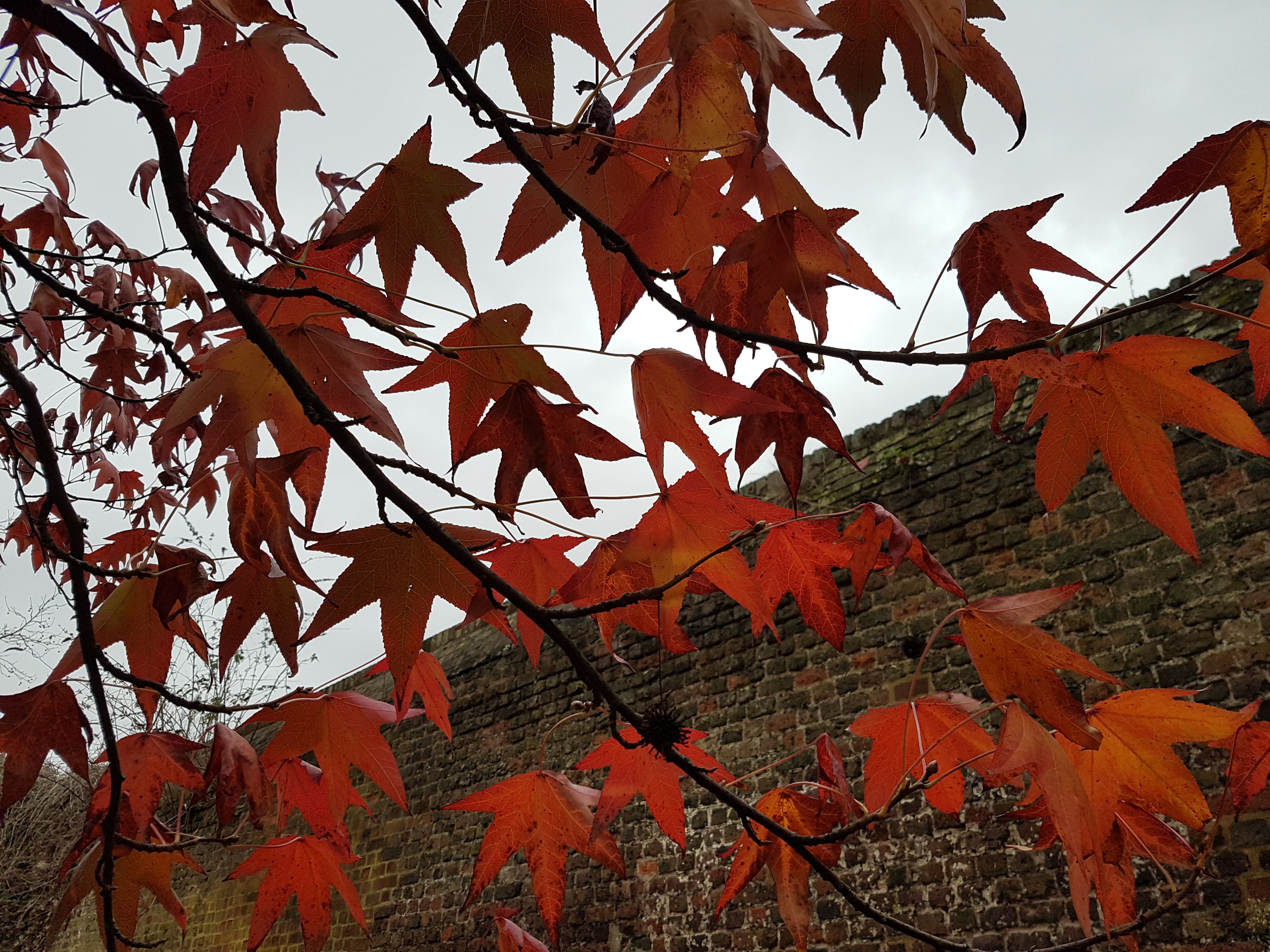
You are autumn. 
You are words in a stream of oranges, yellows, and reds. 
A tree-lined lane and strokes of paint on paper.
A carpet of leaves impossibly orange, still, 
and therefore untrodden,
so if I came any closer I would wear you down
so I can only love you from a distance, now,
and soon the rain will brown you anyway,
and then the frost will hold you
in premonitions of winter.

Four

You are a bird.
You are a bird nesting in the crock of my heart. 
You are warmed by my ventricles massaging your bony claws. 
Held like this, in my centre, you are soundless. 
Feathers can’t rustle with nothing to rustle against, 
and the sound of a bird moving in a bath full of feathers
 is the softest unsound I can imagine. 
Now you are a male bird, a baby pheasant, 
rescued from a fox and left in need of nurturing. 
Your fragility makes a mockery of masculinity 
and in the hot orange glow of a winter fire 
I want to cry at the thought of 
cold on your back and heat on your face. 
You are nesting, sleeping, maybe 
forever or maybe gathering strength for mating season 
when memories cross-pollinate
 and bring new remembrances, 
imagined memories, rewritten in a new light, 
in morning light, in the light of a smudged kitchen window
 or the light filtered through the yellow petals 
of a man-sized flower, 
high above the fence, 
none of which is real, but is anything, really? 
Except the soundless rustle 
and the closed eyes. 
The little bird. 
The beating chest.
The scaly pink eyelids 
and the gentle thought 
of a pursed beak, 
clicking occasionally, 
perhaps in dreams 
of flying or snow or dust baths 
or the light-grasping far reaches of the trees. 

First read in November 2019.

L x
SHARE:

Tuesday, 31 December 2019

Sunday, 15 December 2019

Saturday, 21 July 2018

Writing: Unclean II


Extract II, from a commissioned novella completed last month.

*

Existence is one long terminal illness. If something is terminal, it is formed or situated at the end or extremity of something. It can form at the end, or at the beginning. It is predicted to lead to death, usually a slow and incurable one, full of pain, though the dictionaries and the books often leave that part out. It is the end of a transport route or railway track. It is the final stop. It denotes the end of a part that is furthest from the centre of the body, though no one can agree on where the centre is. According to the law of gravity, the centre is between the hip bones, in line with the second sacral vertebra. But we are always moving, and the centre of gravity moves with us. No matter where it is, the centre cannot hold. A terminal is also the closing of an electric circuit, a place to enter data, a final exam, a bud at the end of a branch. Who knew there were so many kinds of ending.

*

I am always open to collaborations and commissions.

L x

SHARE:

Thursday, 21 June 2018

Writing: Unclean

 
In addition to my own writing, I also write on commission. Below is an extract from a 30,000-word novella that I was commissioned to write on modern paganism and possession.

*

Prologue.

The Settlers and the Fire

from the Book of Settlements, 1214-84

The old stories told that six days’ sailing from the north of Britain lay an uninhabited land. It was said that this land had neither daylight in winter, nor darkness in summer. It was said that travellers ventured there, among their number anchorites from Ireland, farmers from Norway, and Scandinavian seafarers blown astray by northern winds. To those who asked, it was called a land of snow.

A man named Gardar Svafarsson went in search of this land. Guided by his mother and her gift of second sight, they sailed around the island and anchored in the north. They built a house for shelter in the winter, and in the spring they departed. At this time, trees spread from the uppermost mountains to the fringes of the sea. It became known as Gardar’s Isle.

A second man named Flóki Vilgerðarson went in search of Gardar’s Isle. Before the voyage out, his daughter Geirhild drowned. This was a bad omen. Led by three ravens, he found the land, but suffered many trials. He landed during warmer months, when the rivers were teeming with fish. They ate their fill but set no stores aside and made no hay for the harder times to come. His livestock starved in winter, along with many men. Mourning his losses, he climbed a mountain and saw the land gripped with ice. He named it Iceland, and left the following winter, full of sadness and bitterness.

A third man, a viking named Ingolf, made a plan to find the land of ice with his blood-brother Lief. But they were embroiled in fierce battles and many winters passed. Finally, they journeyed to the land but did not stay, returning to Norway after one winter. The following year, Ingolf made a great sacrifice and the oracle told him to return to Iceland. The blood-brothers readied their ships, but they were separated at sea, and landed apart. In view of land, Ingolf flung his highseat pillars from the ship and declared that he would settle wherever the pillars were washed ashore. His brother drifted west and built houses with his slaves, whom he mistreated. One day, they tricked him and his men, and murdered them in a forest. Meanwhile, Ingolf sent his slaves to search for his pillars, and eventually found them in Reykjavík. He learned of the death of his brother many months later, and mourned him fiercely. He lived in Reykjavík for many years and fathered a son whose name was Thorstein. He, in turn, fathered a son: Thorkel Moon the Lawspeaker, who spread wisdom and a love of the land to his only daughter and to his people. Stories told of his deathbed and how he asked to be carried into a shaft of sunlight. They said that he died before he could utter his final words, dedicating his life to the god who created the sun. Some said that these words were to be a plea for forgiveness on behalf of his grandfather.

The old stories did not verify the tale of Ingolf’s transgression, but through spoken words and songs, it entered the myths of the land. In his second winter in the land of ice, Ingolf learned of his blood-brother’s murder. When the body was brought to him, he ordered a site for burial. But the earth was  frozen and the slaves’ tools bent and broke against the icy ground. He ordered a pyre lit instead, but again he was thwarted. The sky and earth were filled with snow, and no kindling would catch. After much toil, the slaves begged to be released. Overcome with rage and grieving, Ingolf slayed them all and called on the gods and spirits in despair. He asked for the power to lay his blood-brother’s body to rest, pledging his soul, body, and life to anyone who would give him fire and light. At his words, the sky glowed green and the pyre glinted with emerald flames. Ingolf fell down in fear at this unnatural sight. It was said that the fire was not the gift of a friendly god. It was said that Ingolf’s words woke a spirit that should never have been sparked from its slumber. It was said that the gift was unclean and that his descendants would suffer its taint for centuries to come.

Despite his fears, Ingolf accepted the gift and laid his brother in the fire. The flames glowed cold and green throughout the night, dancing into the sky and leaving nothing of the body behind. For a week they burned. Some said that Ingolf extinguished them with drifts of snow; others said that he took the fire into himself. All the songs said that he was a colder man after that night. 

*

Do get in touch if you would like to discuss collaborations or commissions of any kind - poetry, prose, film, or theatre.

L x

SHARE:

Saturday, 9 June 2018

Writing: Shadow-wall

Shadow-wall

After too long wrapped in the absence of the sun
I decided to draw a line between myself and the shadows.
I piled rocks upon rocks, small and large,
And stopped the gaps with dying leaves,
Fistfuls of grass and twigs which snapped underfoot.
The mound grew monstrous in proportion,
Its height perilous, but I did not pause until
All the darkness was out of sight. Through sinewy
Leaves the sunlight dropped around me, warming
My aching joints, too long inactive whilst mourning the 
Brevity of things. I buried the reminder of my grief,
Ever striving to suppress my weakness. For an hour
I felt like spinning, and smiling. But when the sun
Tumbled from the top of the sky I felt the darkening
Afternoon leech between the gaps I knew I must have left,
And saw shadow pooling, lapping at my heels,
And I ran from its inevitability, chasing the day
Through the thinning trees, all the time feeling
Damp rising from the earth, and the wind’s taunting bite.

Published in Paris Lit Up in 2013.


L x
SHARE:

Saturday, 4 November 2017

Fireworks, from August to November


Spark. Flame. Fire. Sparkle. Hiss. Bang. Rocket. Up they go, and mark another summer’s end. They used to be such an occasion, as we all decamped to the steep, down-from-the-boys’-school hill opposite the Quarry to watch the show from an un-ticketed spot (all the while watching out for sleeping cows).

Now it is November. I am so-called-teaching late into the night, staring into the blue-light laptop screen, when suddenly the familiar hissing shoots of sound puncture the quiet evening. We are analysing a passage by George Orwell, midway through, discussing in detail the vivacity of the condemned man. I pull up the annoyingly-always-on-the-verge-of-breaking blind and allow myself to be distracted by the intermittently sizzling lights reflected on the window-panes. I explain the noise away, as we continue our slow deconstruction of every sentence, semi-colon, clause.

In the British Library. Coffee with soya milk and three email tabs open. Picking through old folders and come across an old dream narrative about fireworks. It’s very bad indeed, but I like the serendipity of it, beginning and ending with fireworks. ‘Fireworks. I’m prisoner and guard. The fireworks are in my honour…’ My dreamscapes (so-called) often start like this one, with weird statement-y statements which stretch the sentences as each paragraph develops. I need to learn to prune and chop.

My London house has started hosting salons, where we read or show something creative. We’ve only had one so far, but the quality of everyone else’s writing put me to shame. Particularly when I come across scrawls like this one, written half-asleep, with no attention to grammar or sense or logic. I’ll have to start writing again (anything that isn’t another email or lesson plan, please!!) to have something to show at the next meeting. In the meantime, here is a topical if terrible remnant of an old dream. I’ll come back sooner this time – I feel like this place should be a good remedy for children-induced madness. (An anguished, screaming toddler is dragged past my table as I write these words. Oddly appropriate.)


*

Fireworks. I’m prisoner and guard. The fireworks are in my honour and at my own expense. Each little explosion is mirrored on the globed eyes of the observers and observed. Here it works that way: we encompass juxtapositions and antitheses in one body, or perhaps one mind. Such distinctions hardly seem to matter.
I lean upon a shoulder that is also mine, warmth swelling around our mass, as if to each other we are a comfort, these two lonely bodies without distinction. Perhaps in some way we’re hoping that through grammatical aspiration we can materialise, realise, give matter to this plurality.
Equipped with only four corners, the prison is a modest one: a rectangular box with a large glass wall, on which sporadic fireworks are reflected to muted acknowledgment.
Conversation develops in one corner.
‘I created all this for you, even from within this prison’s walls,’ I say.
‘You shouldn’t talk to me,’ I say. ‘You shouldn’t tell me these things.’
‘I can’t keep them from you either,’ I say.
‘But everything you say is empty,’ I say. ‘Your words mean nothing.’
‘Then why have they made you sad?’ I say.
‘Because you look at me as if I’m something unknowable,’ I say. ‘How don’t you see that everything I know, you also know, and everything I say is something you have always been planning to say but never could?’
‘Because I am your prisoner and you are my guard,’ I say.
‘Why are you here?’ I say. ‘Why are you a prisoner?’
‘Because I foresaw that something might happen,’ I say.
‘And, perhaps,’ I say, ‘because you dreamed of making it come about.’
‘And now I comfort you,’ I say.
‘In my imprisonment,’ I say. ‘Though still –’
‘– nothing has happened,’ I say.
 ‘Maybe this is all that needed to happen,’ I say.
I watch the proceedings, and feel the rush of warmth again. I am beginning to understand something and someone, even if that one remains only myself.
The fireworks continue to rain their fiery showers on the glass, and on our watching eyes.


x
SHARE:
© Lily Freeah Leoma. All rights reserved.
Blogger Template Designed by pipdig